Saintonge & Marais
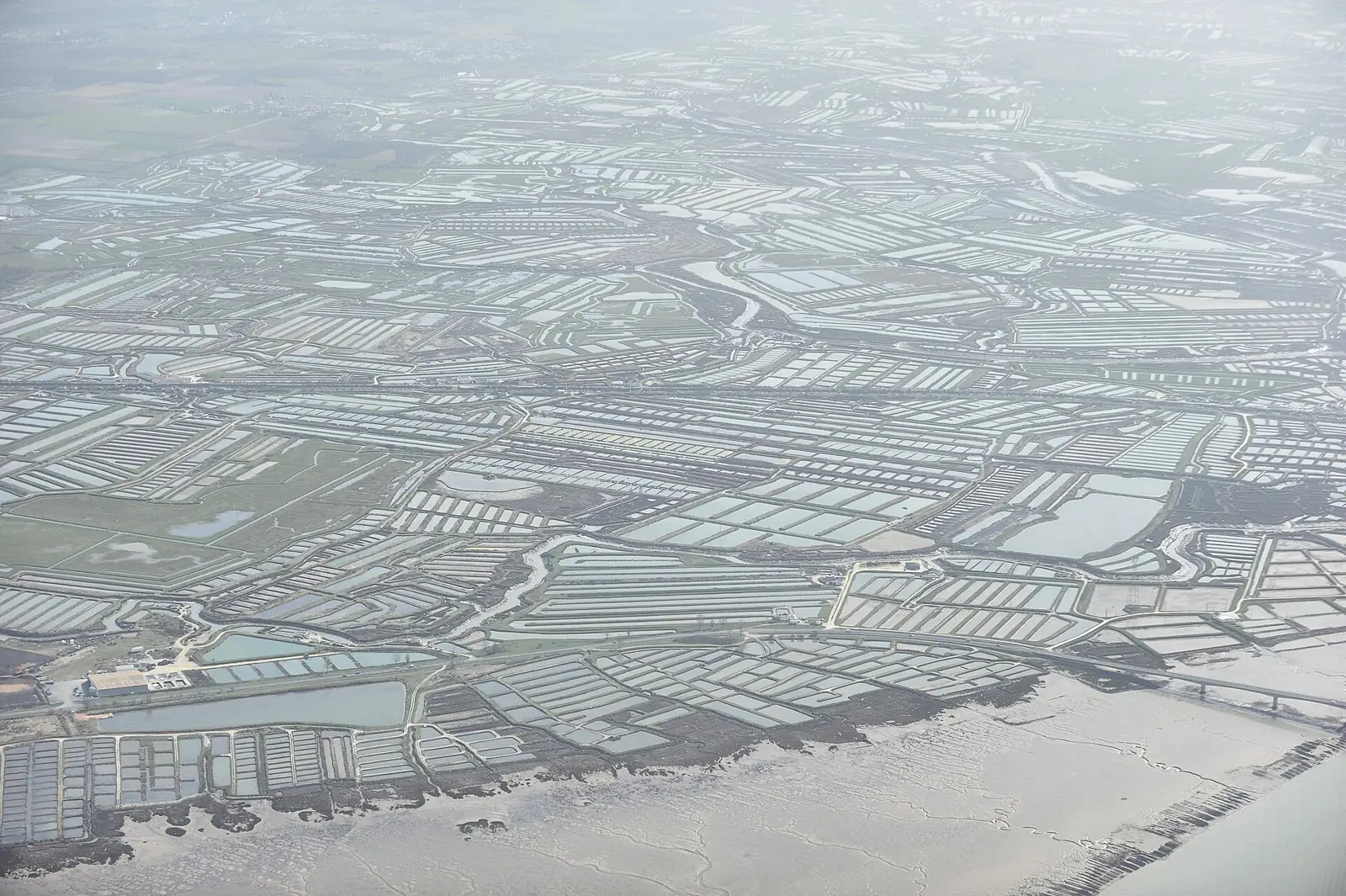
Aerial view of oyster ponds and channels in the Seudre marsh

Gazetteer

Places

Eleven towns, islands and marshes, in alphabetical order because any other order started an argument.

Seudre marsh · O. Dugornay / Ifremer, CC BY 4.0

Île d’Aix

Island · no cars

A crescent of an island, three kilometres long, reached by a twenty-minute ferry from the Pointe de la Fumée near Fouras. No cars, so everyone rents a bicycle from the same four sheds by the jetty and pedals round in about an hour. Napoleon spent his last nights in France here in July 1815; the house is now a small, oddly moving museum.

Stay for the last boat back, when the day-trippers have gone and the tamarisks start to hiss in the evening wind.

Getting there
Ferry from Fouras, roughly hourly in summer, four a day in winter.
Eat
Moules at Le Bout du Monde, a hut with six tables on the north beach.
Time
Half a day.
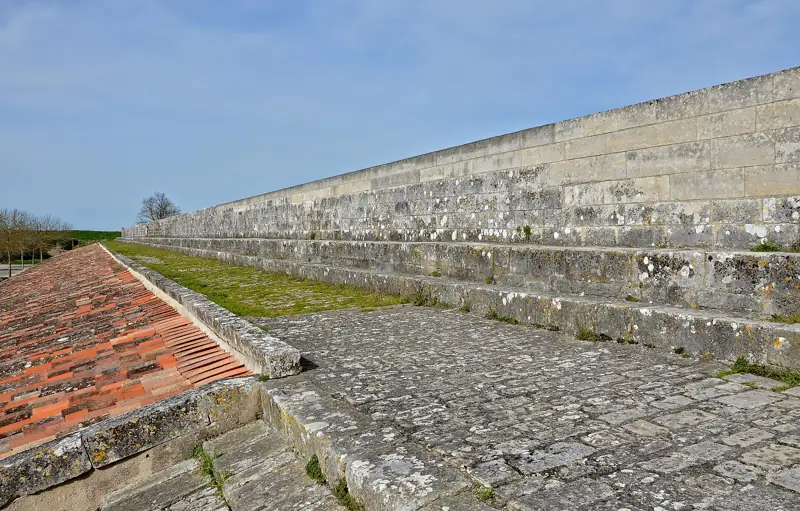
The walkway along the ramparts of BrouageFortified town

Brouage

Fortified town · salt marsh

In the seventeenth century this was the great salt port of the Atlantic and the place Richelieu chose to besiege La Rochelle from. Then the harbour silted up, the sea withdrew, and Brouage was left inside its walls in the middle of a marsh, like something dropped and never collected.

Samuel de Champlain was probably born here, which is why half the visitors are Québécois. The ramparts are complete and you can walk the whole circuit — about two kilometres — in forty minutes. Go late in the day when the light flattens across the old salt pans and the herons come in.

Getting there
Bus 6 from Rochefort, or 14 km by bike along the Canal de Brouage.
Eat
La Halle aux Vivres for a slow lunch inside the old military bakery.
Time
Two to three hours.
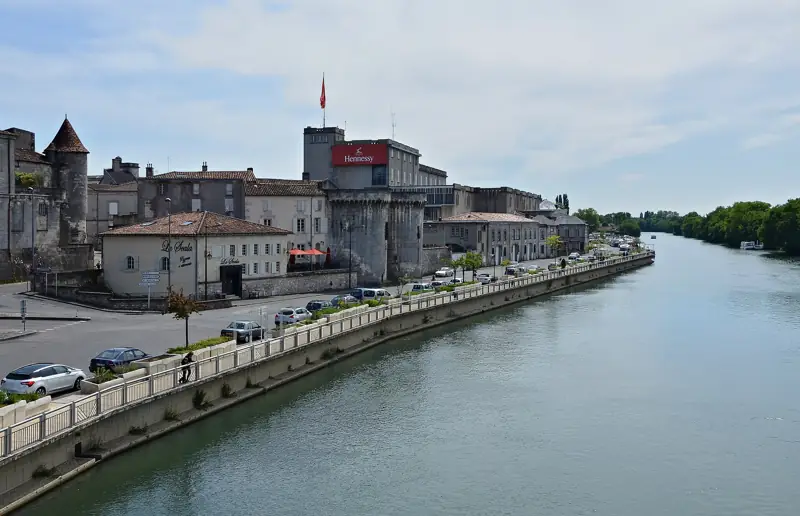
The Charente and the quays of CognacBrandy country

Cognac

Town · Charente · brandy

The town is smaller and plainer than its name. The walls along the quays are stained black by Torula compniacensis, a fungus that lives on the alcohol evaporating from the barrels — two per cent a year, the angels’ share. The big houses run polished tours. They are fine.

Better: cycle twenty minutes upriver to Saint-Brice or Bourg-Charente and visit one of the family producers who still distil their own. Phone ahead; some only open the door if they know you’re coming. Ask to taste the pineau, which rarely leaves the region.

Getting there
TER from Saintes, 25 minutes.
Eat
Chez Mireille, rue Grande — fixed lunch menu, no choice, no complaints.
Time
A day, or a night if you’re tasting.
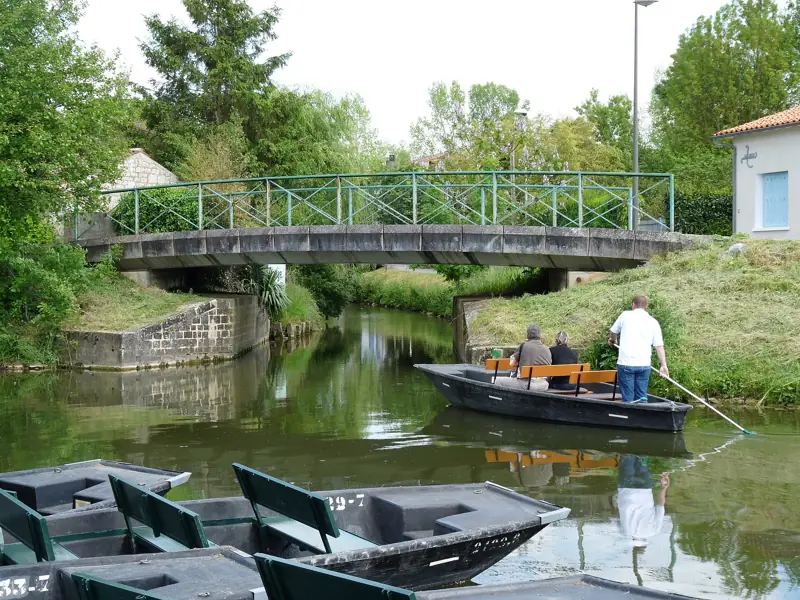
A boatman poling a flat boat under a footbridge in CoulonVenise Verte

Coulon & the Venise Verte

Village · wet marsh

The Marais poitevin is the second-largest wetland in France, and its eastern half — the wet marsh, or Venise Verte — is a maze of narrow canals called conches and rigoles, shaded by pollarded ash trees and duckweed so even it looks like lawn. Coulon is the usual way in.

Hire a flat boat with a boatman rather than paddling yourself: you won’t get lost, and they will set fire to the marsh gas bubbling up from the mud with a lighter, a trick that never stops being funny. Then rent a bicycle and follow the towpaths east towards Arçais, where it’s quieter.

Getting there
Bus from Niort station, 25 minutes. Niort has TGV connections to Paris.
Eat
Eels, if you dare; mogettes (white beans) with jambon de Vendée if not.
Time
A full day. Two if you like silence.
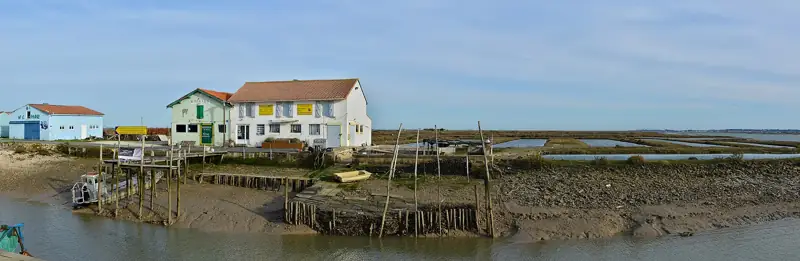
Oyster sheds and wooden jetties along the channel at La CayenneOyster basin

Marennes

Oyster basin · estuary

The Marennes-Oléron basin produces more oysters than anywhere else in Europe, and the oysters spend their last weeks in claires — shallow clay ponds in the old salt marsh — where a microscopic algae turns their gills faintly green. This is the whole point of the place.

The road out to the port of La Cayenne is lined with wooden sheds painted blue, yellow and oxblood. Several sell a dozen oysters, bread, butter and a glass of white for the price of a sandwich in Paris. Eat them on the jetty.

Getting there
Bus from Rochefort or Royan; better by bike via Brouage.
Eat
Any shed with a queue of locals and a hand-written sign.
Time
A long lunch.
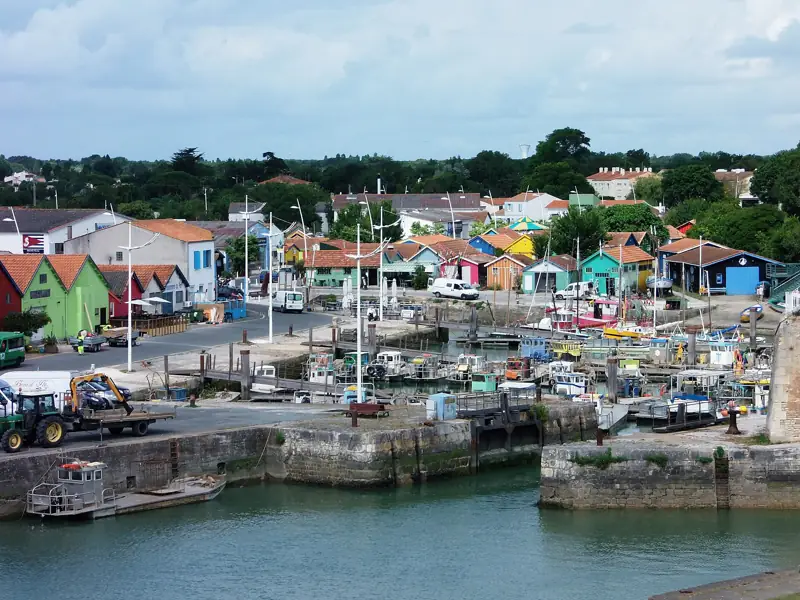
Brightly painted huts around the harbour at Château-d’OléronIsland

Île d’Oléron

Island · bridge · beaches

Larger than it looks, and joined to the mainland by a bridge since 1966. The west coast is open Atlantic, pine forest and very long beaches; the east coast is oyster country and marsh. The fishing port of La Cotinière is the liveliest place on the island, especially when the boats come in mid-afternoon and the catch is auctioned in the hall.

Château-d’Oléron has a citadel and a row of artists’ huts on the harbour. Saint-Trojan has a little train through the forest to the beach. There is a cycle path almost everywhere.

Getting there
Bus 3 from Rochefort, or the summer ferry from La Rochelle to Boyardville.
Eat
Fish soup at La Cotinière; éclade on the beach in summer.
Time
Two days at least.

Pons

Small town · pilgrim route

A hilltop town on the road to Santiago, with a square twelfth-century keep you can climb and a pilgrims’ hospital whose stone walls are scratched with graffiti left by people walking south eight hundred years ago — crosses, horseshoes, little boats. It takes ten minutes and stays with you for longer.

Getting there
TER from Saintes, 15 minutes.
Time
Two hours, or a stop on the way to Talmont.
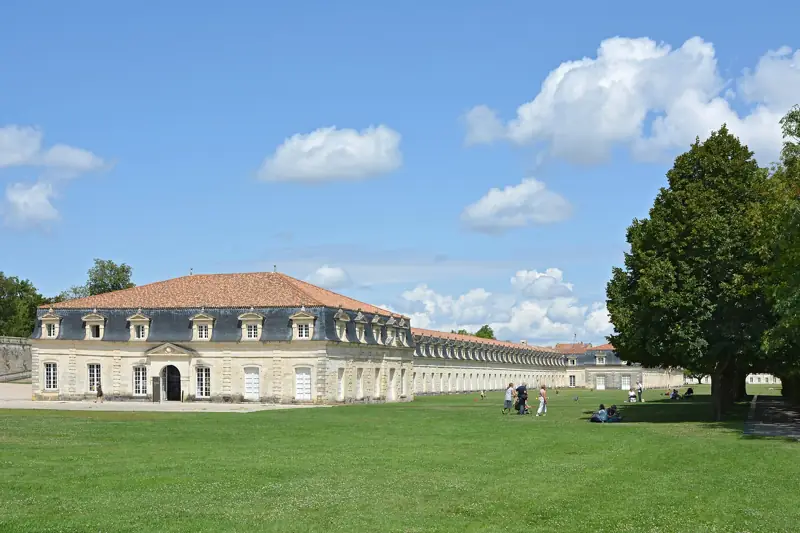
The long façade of the Corderie Royale across its lawnNaval town

Rochefort

Naval town · Charente

Founded by Colbert as an arsenal, Rochefort was built quickly, on a grid, a safe distance up the Charente from the English. The Corderie Royale, where the navy’s ropes were made, is a single building 374 metres long. The shipyard alongside built the Hermione, the frigate that took Lafayette to America; a replica was launched here in 2012.

Don’t miss the Maison de Pierre Loti, the novelist’s house, done out inside as a mosque, a Gothic hall and a Turkish salon. Then take the transporter bridge across the river: a gondola hung from a steel gantry, one of the last of its kind.

Getting there
TER from La Rochelle (30 min) or Saintes (40 min).
Eat
Le Galion on the old dock — mouclade and a view of the masts.
Time
A day. It makes a good base.

Saint-Jean-d’Angély

Market town · Boutonne

Once one of the great abbeys on the pilgrim road, which kept — so it claimed — the head of John the Baptist. The abbey church was never finished and its two towers stand oddly alone over the square. The Saturday market is the best in the area for cheese and galette charentaise.

Getting there
TER from Saintes, 25 minutes.
Time
A Saturday morning.
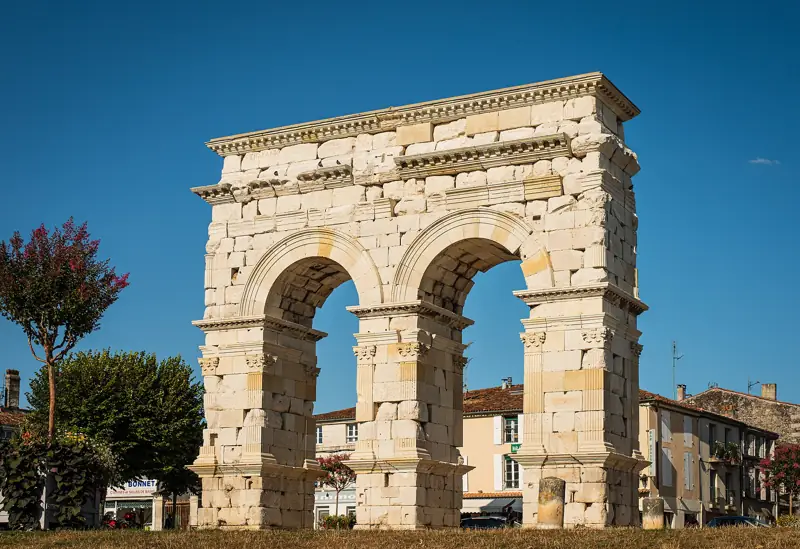
The Arch of Germanicus in Saintes against a blue skyRoman town

Saintes

Capital of Saintonge · Charente

Mediolanum Santonum to the Romans, who left a triumphal arch — moved, stone by stone, when the bridge it stood on was demolished in 1843 — and an amphitheatre for fifteen thousand people, now a sunken lawn where locals walk their dogs. Across the river, the Abbaye aux Dames has one of the finest Romanesque façades in France.

The old town on the left bank is easy, unhurried and full of good bakeries. In the evening, hire a gabare — a flat river barge — for an hour on the Charente. It is the most relaxing thing in this guide.

Getting there
TER from Bordeaux, Niort or La Rochelle.
Eat
Le Pont Palissy for Saturday lunch after the market.
Stay
See Practical.
Time
Two days, more if you use it as a base.
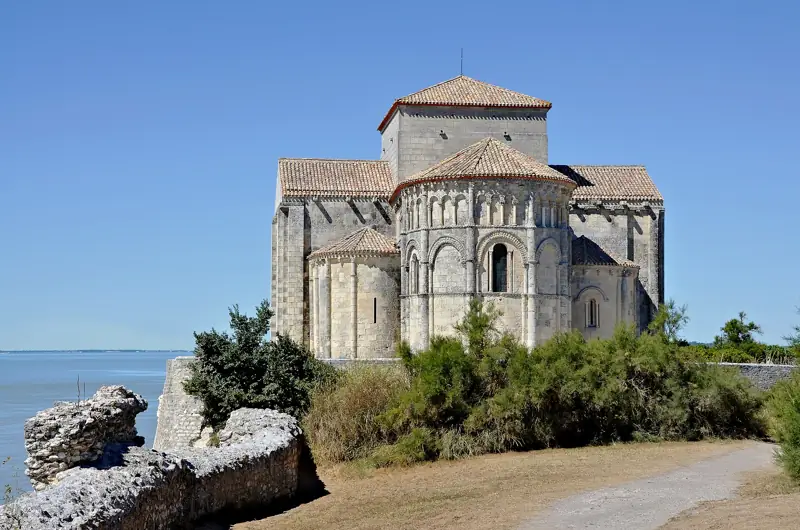
Sainte-Radegonde church on the cliff above the GirondeEstuary village

Talmont-sur-Gironde

Village · estuary cliffs

A walled village of a hundred people on a promontory over the Gironde, built by the English in 1284 on a grid you can still see. The Église Sainte-Radegonde sits right at the cliff edge; part of the nave has already gone into the water. On either side, fishing huts on stilts — carrelets — lower square nets into the estuary on pulleys.

In July and August, arrive before ten or after six. Hollyhocks grow out of every crack in the pavement.

Getting there
Bike from Royan along the estuary path (18 km), or car.
Time
One to two hours.